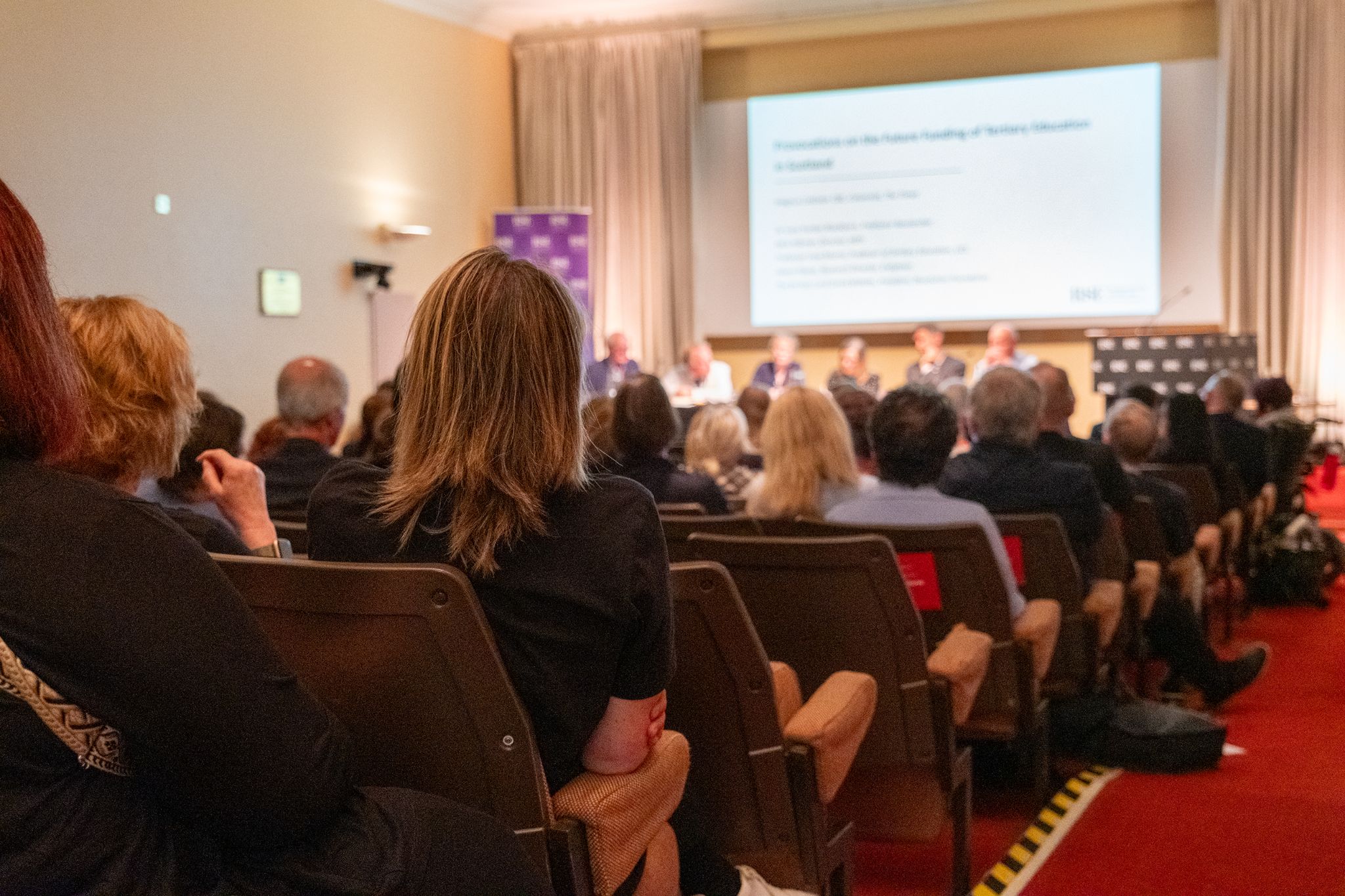
The RSE supports academics at every stage of their research careers.
The Royal Society of Edinburgh (RSE) was founded in 1783 to embody its ideals of inquiry without constraint and the free exchange of ideas and information across disciplines, and it has maintained this mission ever since.
Today it comprises some 1,800 elected fellows from across the full spectrum of academic and public life. Through its Research Awards, the RSE supports academics at every stage of their research careers.

The Royal Society of Edinburgh’s Wolfson Lecture Theatre
© RSE / Gemma Christina McNaughton
Leading the way on climate action, energy futures and education
The RSE has a dedicated team of staff working solely on aspects of policy advice. The convening power of the RSE allows it to bring the expertise of the fellowship to bear in developing impartial, evidence-based policy advice and papers that inform government and challenge the status quo.
For example, in 2024 the RSE released the Inquiry into public financial support for tree planting and forestry which continues to influence public discourse about the environment in Scotland.
Ahead of the Scottish Parliament election in May 2026, the RSE hosted events nationwide to stimulate debate and inform voters on the key issues shaping Scotland’s future.
Communities across Scotland, including Aberdeen, Dundee, Dumfries, Galashiels, and Ullapool, were invited to spaces where they could explore evidence, hear from local voices, and exchange ideas on the challenges and practical solutions.
The RSE also added its voice to other public service leaders in Scotland.
The RSE also hosted Scotland’s inaugural environmental solutions summit, “Just Don’t Waste,” bringing together leading UK and international experts to address five interlinked global crises: biodiversity loss, climate change, food insecurity, water scarcity and public health threats. Organised in partnership with JNCC, NatureScot and the Scottish Government, the event invited the public into high-level discussions shaped by two major new reports from the Intergovernmental Platform on Biodiversity and Ecosystem Services (IPBES) – the Nexus Assessment and the Transformative Change Assessment.
The RSE also added its voice to other public service leaders in Scotland to the call for a more accurate, outcomes-focused approach to measuring productivity, working closely with the ONS to improve national metrics, producing a report on its work in mapping productivity metrics.
A range of RSE policy work speaks to the UN SDGs.
Supporting Scotland’s progress towards the UN SDGs
A range of RSE policy work speaks to the UN SDGs. For example, the report Gaps, Overlaps and Challenges, is the latest in a consistent programme of work in the area of education policy. This supports progress towards SDGs such as Quality Education (SDG 4), Decent Work and Economic Growth (SDG 8), Reduced Inequalities (SDG 10), and Climate Action (SDG 13).

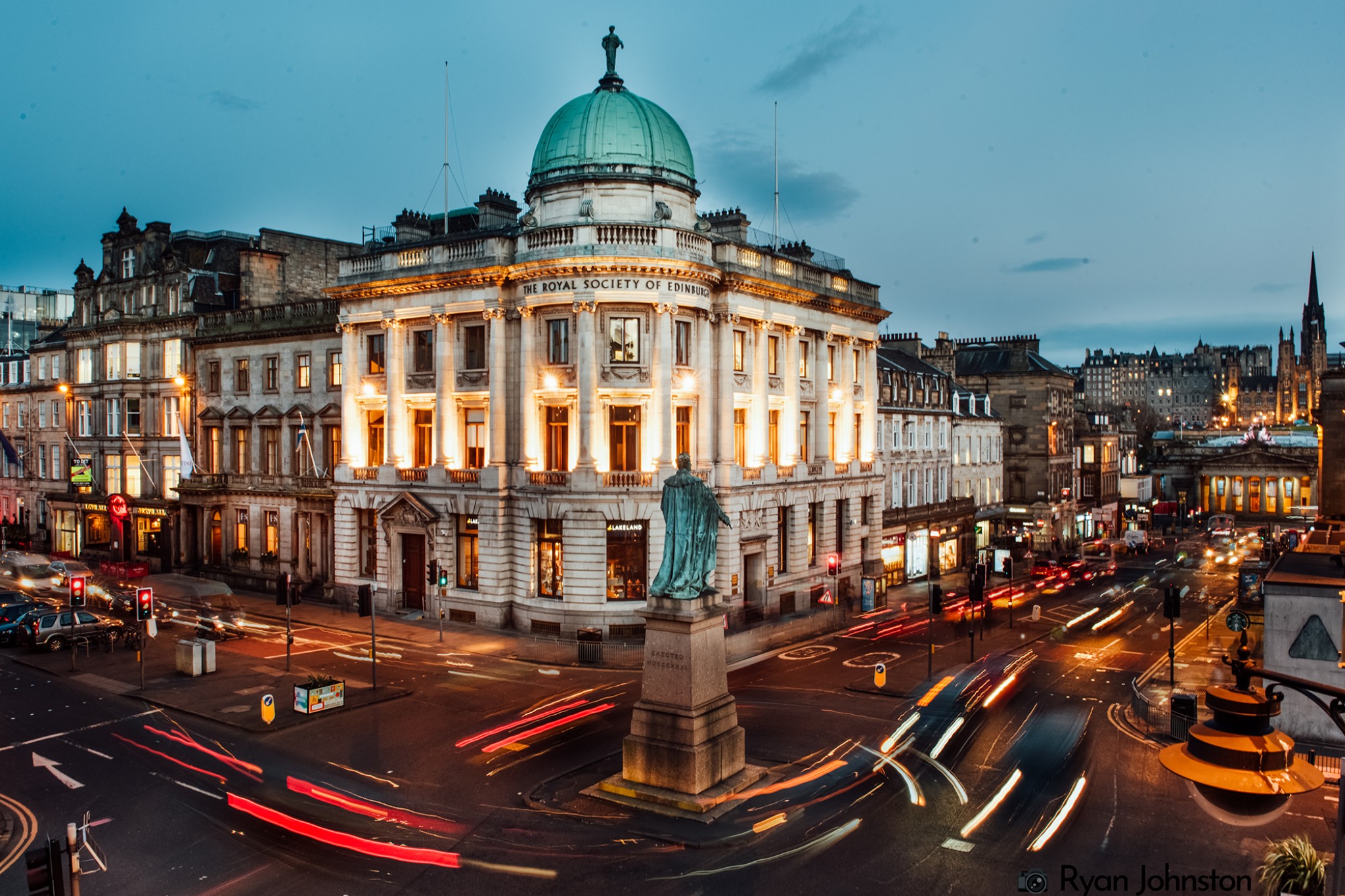
The Royal Society of Edinburgh, George Street, Edinburgh
© RSE / Ryan Johnston
Collaborating with the RSE
The Royal Society of Edinburgh has a dedicated international programme which is responsible for collaboration with sister academies and other relevant organisations overseas. Its Africa, Asia Pacific, and North America Working Groups all present opportunities for collaboration in addressing global challenges, provided they align or overlap with the goals of the RSE. The overall brief of these groups is to devise ways of working across disciplines on subjects such as climate change, sustainability, artificial intelligence, security and migration.
The RSE has also served as the Secretariat for the UK and Ireland Human Rights Committee of Academies. This was a two-year role which involved leading on accelerating urgent case responses and defending academic freedom. The RSE’s role as Secretariat concluded in 2025, while the RSE remains an active member of the committee.
In addition, the RSE is continuing its outreach to and collaboration with international educational institutions in the same spirit as the recent Memoranda of Understanding – ensuring joint research funding and closer working relationships with institutions in Taiwan, Lower Saxony and Malawi.
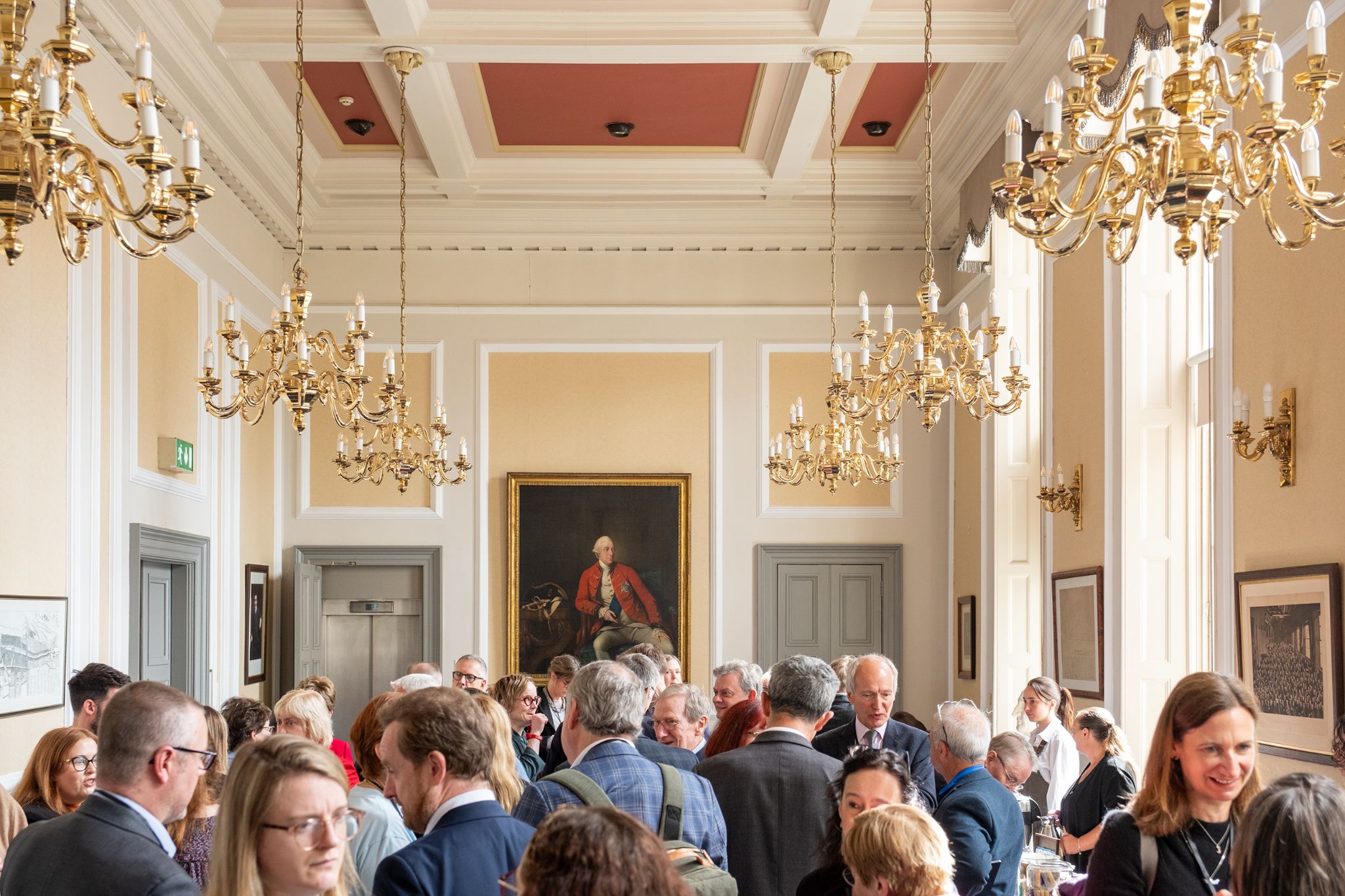
The RSE building in Edinburgh’s New Town is also a venue for hire which regularly hosts conferences for a range of different subject areas. With 13 versatile spaces dedicated to learning and coming together, the RSE is the ideal venue for a variety of different needs.
As a venue for a variety of corporate and learned society events, the Royal Society of Edinburgh building offers exceptional value right in the centre of Scotland’s capital city. It combines modern audio-visual facilities with historical charm.
The building on Edinburgh’s George Street in New Town offers a wide range of versatile spaces for either large presentations and lectures or intimate meetings and strategy sessions – each equipped with high-quality AV technology, and staffed by an experienced facilities team.
Finally, the RSE is ideally situated just a few minutes' walk from Edinburgh Waverley train station, making it a perfect hub for organisations outside the central belt who need a meeting place.
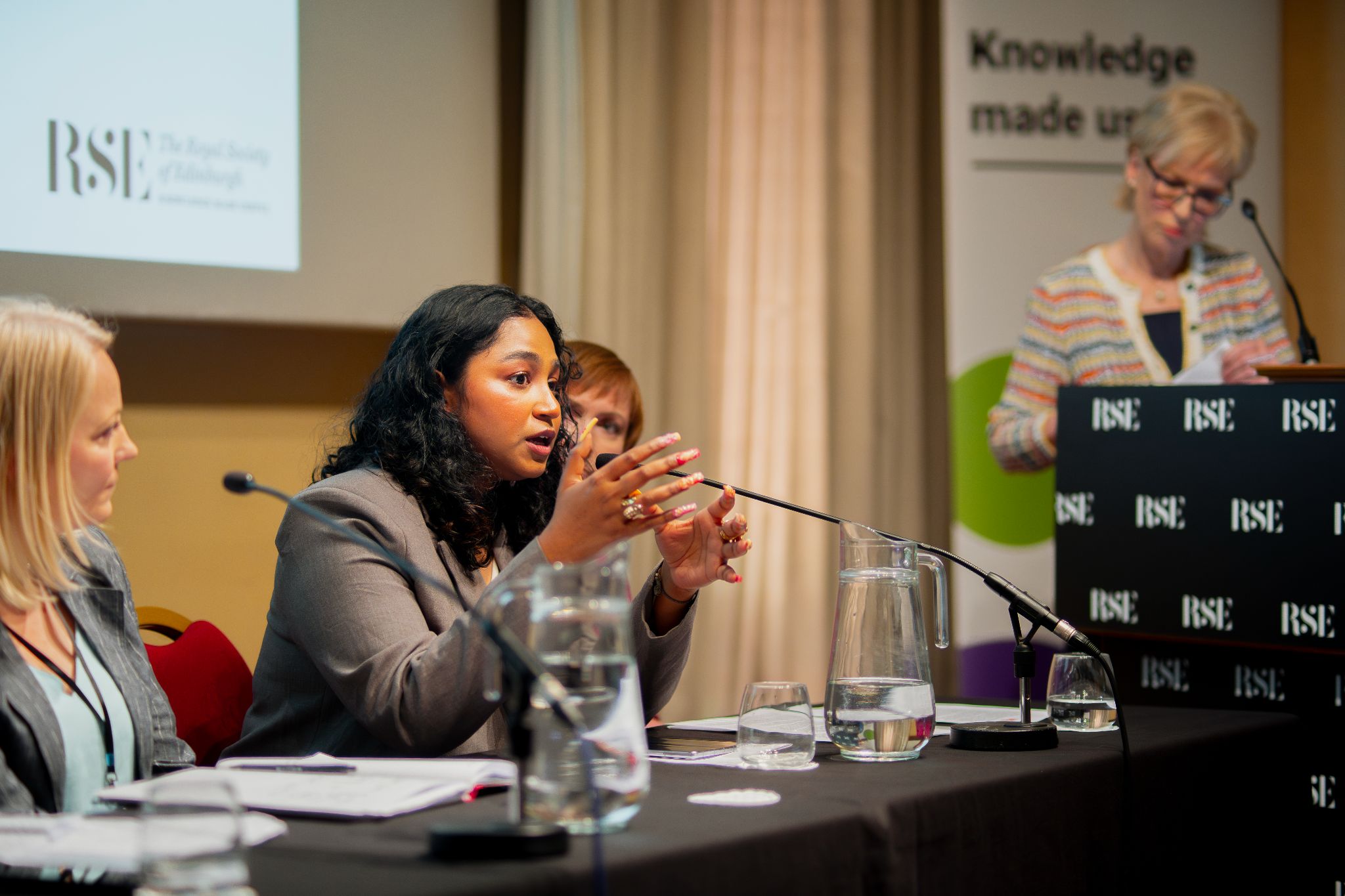
As Scotland’s National Academy, the Royal Society of Edinburgh exists to shape a more prosperous, innovative and globally connected future for Scotland.
Dr Poonam Malik FRSE, RSE's Vice President - Business (Economy & Enterprise), and Chair of the Economy and Enterprise Committee, said: “As Scotland’s National Academy, the Royal Society of Edinburgh exists to shape a more prosperous, innovative and globally connected future for Scotland. Each year, through our Research funding Awards and over 25 years of impact delivered through RSE's Enterprise Fellowship Scheme funding, international collaborations, and nationwide public engagement and policy work reaching tens of thousands of people, the RSE turns knowledge into real-world impact.
“Our Fellowship includes more than 1,800 of Scotland’s leading minds, with a growing number drawn directly from industry, entrepreneurship, and high-growth innovation. That growth reflects a powerful truth: innovation, enterprise and entrepreneurship is no longer at the edges of Scotland’s knowledge economy – it is at its heart.
“Whether through deep collaboration with our Fellows and programmes, or simply by opening the doors of our iconic Edinburgh headquarters to Scotland’s innovators, scale-ups and investors, the RSE is proud to be a platform where ideas turn into spinout and startup companies, and companies into global success stories creating large numbers of high-quality jobs and contributing to the nation's economy. By utilising the RSE's space as the venue for societal and policy events and the expertise of its staff, the RSE is extremely supportive of the Scottish business community. We are not just supporting Scottish businesses — we are helping shape the next chapter of Scotland’s thriving intellectual economic future.”
We have a vibrant and growing public engagement programme, which includes the free-to-all Curious Festival of Knowledge, which takes place each September.
Contributing to social, cultural, and economic wellbeing
The various strands of the RSE’s day-to-day work all aim to make knowledge useful for the public good. We have a vibrant and growing public engagement programme, which includes the free-to-all Curious Festival of Knowledge, which takes place each September. Curious is an eclectic mix of workshops, talks and other activities that showcases the exciting, interesting and innovative things that are taking place in academic Scotland.
The RSE’s public engagement programme also supports a wide range of standalone talks and workshops outside of Curious, but that are culturally, socially and economically relevant. The RSE Investigates series continues to prove successful as it explores issues like conservation and language in depth and in a way intended to be appealing to all audiences.
The RSE also has a burgeoning schools engagement programme. Covering subjects from forensic science, astronomy and physics to literature, culture, and the arts, the RSE works with teachers to tailor each talk to class and curriculum needs.

The Royal Society of Edinburgh’s Wolfson Lecture Theatre
© RSE / Marina Solar
Leveraging business events for policy impact
As productivity is a vital and ongoing issue, the RSE has held seminars on macro-level productivity issues in Scotland and the UK, led by Prof Bart Van Ark, the Director of the UK’s Productivity Institute. More information is contained in the report The Power of Productivity here.
Additionally, the RSE was approached by the British Standards Institute (BSI) to produce a policy paper examining the critical – but often unsung – role of quality infrastructure in scaling net zero. The paper was launched at the International Electrotechnical Commission (IEC) annual General Meeting in Edinburgh in October 2024, which brought over 1,500 international delegates together in the UK for the first time in 35 years. Through this collaboration, the RSE further raised its international profile and illustrated its unique ability to blend academic expertise with industry knowledge and political credibility to generate workable policy solutions.
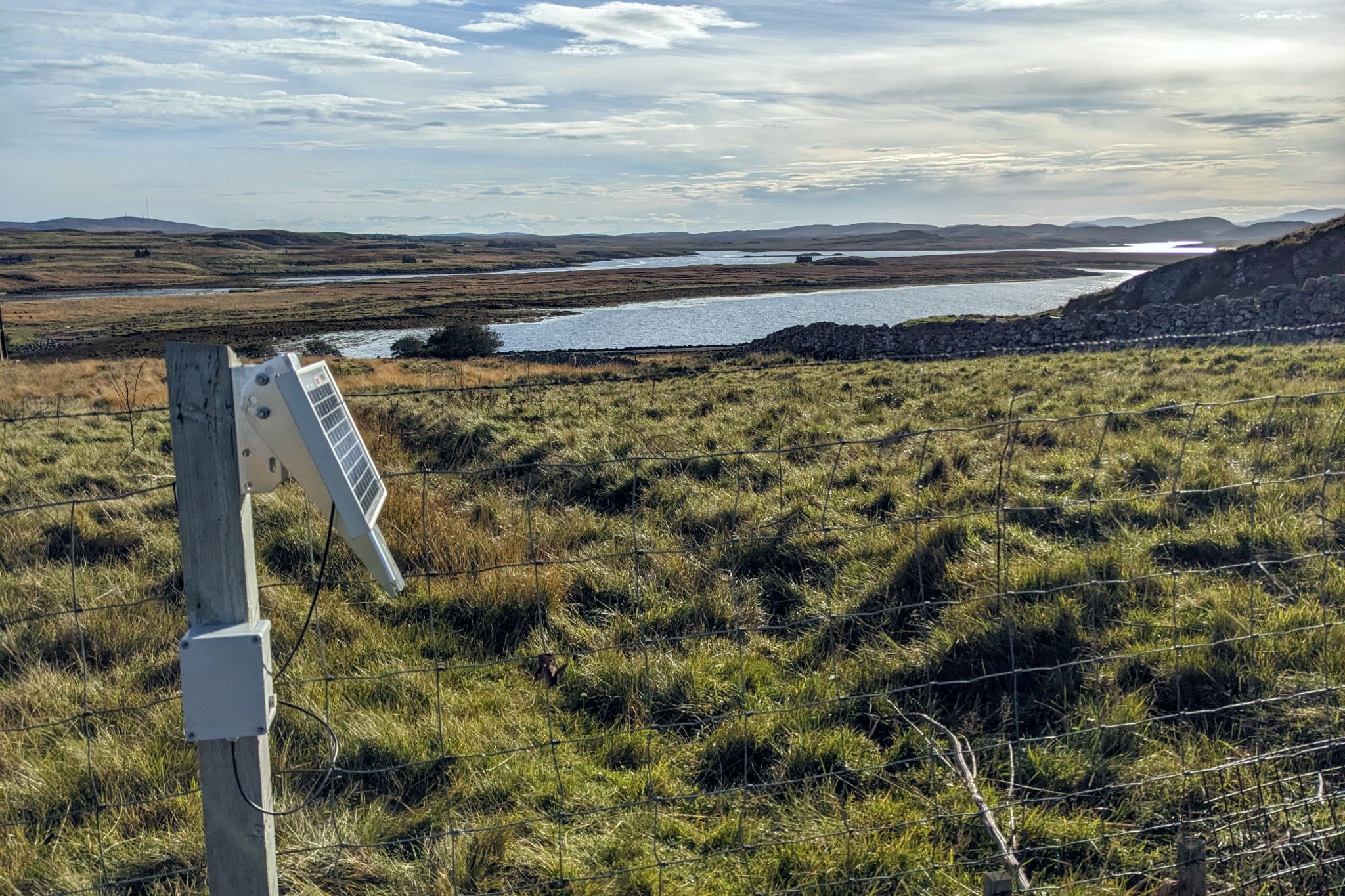
The RSE is committed to each of the different strands of support for academics both at home and abroad.
Looking to the future
The RSE is committed to each of the different strands of support for academics both at home and abroad, through direct funding and the whole range of collaborative work outlined previously.
Looking at 2026 specifically, as an election year at a critical time in modern history, the RSE will present an impartial document, containing a list of key policy issues. It is intended both to inform and generate debate about how the major players in Scottish politics intend to govern, if successful at the ballot box. The Royal Society of Edinburgh’s Fellowship, convening power and, above all, its impartiality are absolutely vital to this endeavour.
Collaborate with our Transformation Protocol partners when you bring your event to Scotland.